
Zinc Coating From 40 to 275 g/m²: A Technical Guide to Galvanized Pipe Specs
Zinc coating weight is the line item that most often separates two quotations that look identical on paper. A pipe quoted at 40 g/m² and a pipe quoted at 275 g/m² can share the same outside diameter, the same wall thickness and the same product standard, yet age very differently in a wet basement, a coastal yard or an irrigation line. This guide works through the parameters that actually decide galvanized pipe fit: coating mass across the 40 g/m² to 275 g/m² range, the choice between hot dip and pre-galvanized processing, outside diameter from 20 mm to 219 mm (1/2 inch to 8 inch), wall thickness from 0.8 mm to 2.75 mm, lengths of 5.8 m, 6 m and custom random lengths, and the end configuration that ties the whole specification together.
Problem Definition: Why “Galvanized” Is Not a Specification
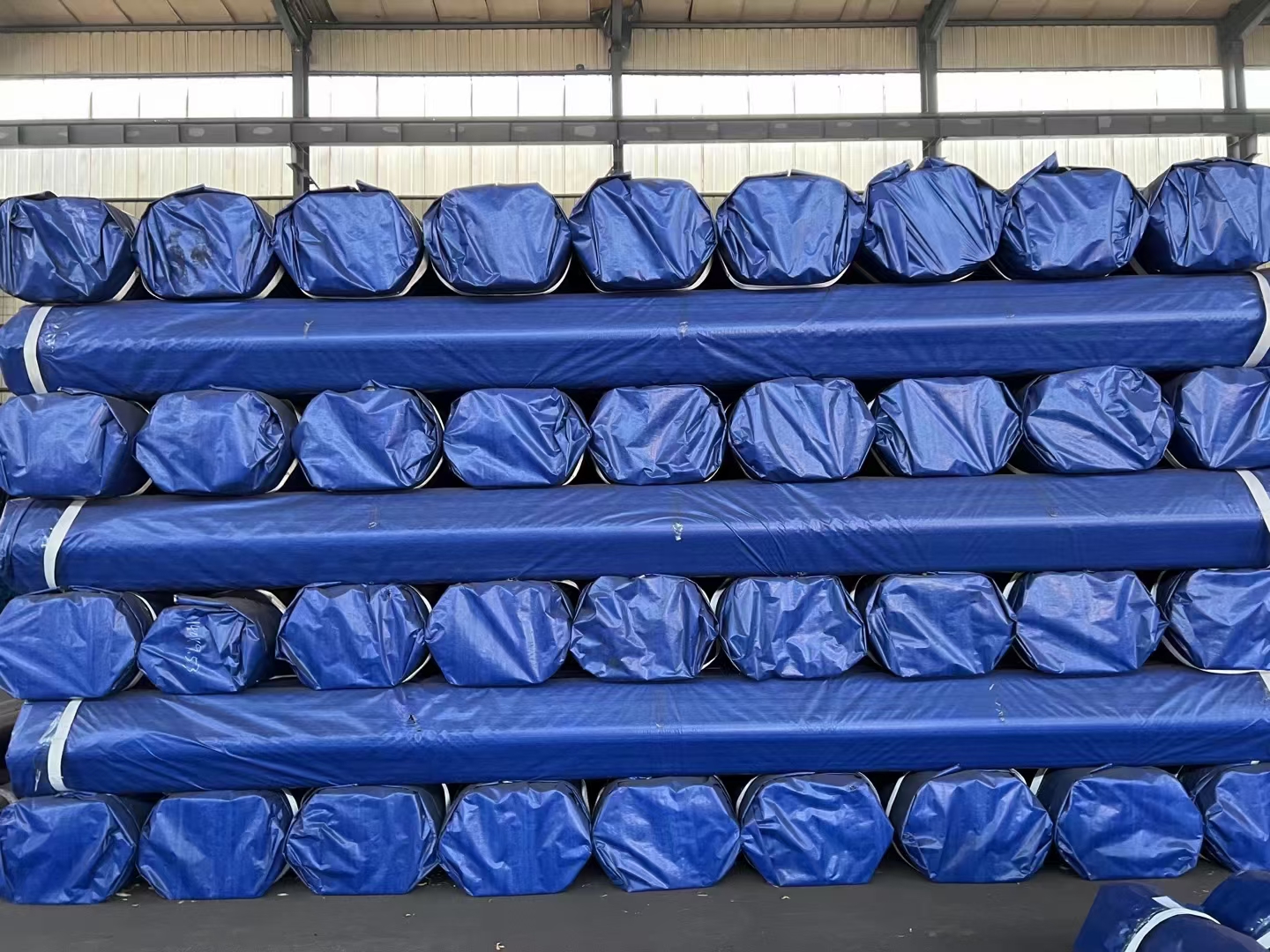
A purchase order that reads only “galvanized steel pipe, 2 inch, 6 m” hands four decisions to the supplier: how much zinc, applied by which process, on which substrate and wall thickness, and with which end finish. Each of those decisions moves both cost and service life, and none of them is visible in a photograph.
Four failure patterns follow from that ambiguity:
- Coating mass is left unstated. The supplier defaults to the lightest class that still looks acceptable on arrival, which may be appropriate indoors and inadequate outdoors.
- Process is left unstated. Hot dip galvanizing after fabrication and pre-galvanized coil followed by forming are different products with different coverage behaviour, especially at welds and cut ends.
- Substrate and wall are left unstated. Wall thickness tolerance affects pressure capability, threading depth and bundle weight far more than most buyers expect.
- End configuration is left unstated. Threads, grooves or flanges cut after coating strip zinc from the most corrosion-prone area of the pipe.
The opposite error is just as common. Specifying 275 g/m² for an indoor dry-service installation adds zinc cost and, in small bores, can complicate tight-tolerance threading without adding meaningful service life. The correct approach is to pick the coating class from the exposure condition and then lock the remaining parameters around it.
Industry Background: Why Coating Weight Moved Up the Datasheet
Steel pipe remains a carbon-steel-dominated category. Fortune Business Insights projects the global steel pipe market at USD 109.72 billion by the end of 2026, with carbon steel holding a 78.0% share of that market, and seamless pipe accounting for over 66.0% of the technology segment in 2025. Galvanized product sits largely inside the welded side of that picture, where a zinc coating is applied to a carbon steel substrate to extend service life in atmospheric and water-contact conditions.
Two shifts have pushed coating mass to the top of the buyer’s checklist. First, project specifications increasingly reference a coating mass figure rather than the generic word “galvanized,” because the figure is measurable and repeatable at goods-in inspection. Second, the standards landscape has broadened. A single supplier may quote against EN 10255, BS 1387, ASTM A53, ASTM A106, EN 10217, EN 10210, API 5L or ASME B16.9 depending on the application, and each standard treats coating, dimensions and testing differently.
Why this matters at evaluation stage: when two suppliers quote the same nominal size at very different prices, the gap is usually not margin. It is coating class, wall tolerance, end processing or documentation. A normalized RFQ closes that gap before the comparison starts.
The Four Numbers That Decide Fit
1. Zinc coating mass: what 40 g/m² to 275 g/m² actually controls
Coating mass expresses how much zinc is present per unit of pipe surface, and it is the primary — though not the only — driver of how long the pipe runs before the first red rust appears. Within the 40 g/m² to 275 g/m² band, the two ends of the range serve different jobs:
- Around 40 g/m²: a light class. It suits indoor or sheltered service, dry interiors, temporary protection during transport and storage, and pipe that will be painted or powder-coated afterwards.
- Around 275 g/m²: a heavy class. It is chosen for outdoor exposure, high humidity, coastal atmospheres, cyclic wetting and applications where handling abrasion during installation is expected.
Two checks must accompany any coating figure in a specification. First, confirm whether the stated g/m² refers to both surfaces combined or to a single surface, because the two conventions are not interchangeable and a quote written under one convention can look 100% heavier than it is. Second, name the test method and the acceptance rule, so that “275 g/m²” can be verified rather than assumed.
Coating mass is also not the same thing as coating quality. A heavy coating applied poorly can flake at bends and at cut ends, while a well-controlled lighter coating can perform better in a formed or threaded application. Specification language should therefore cover mass, adhesion expectation and end repair, not mass alone.
2. Hot dip galvanized versus pre-galvanized
The two processes are frequently confused because both end with the word “galvanized” on the datasheet.
Hot dip galvanizing after fabrication immerses the finished pipe in molten zinc, producing a metallurgically bonded zinc-iron coating that covers the outside surface, the bore and the weld zone. It is the process that supports heavier coating classes and full coverage at fabricated ends. Its trade-offs are a slightly rougher surface, the need to schedule dipping after cutting and threading, and the risk of dimensional or straightness change if the section is thin-walled.
Pre-galvanized processing starts from zinc-coated steel coil, which is then formed and welded into pipe. The result is a uniform, smooth, thinner coating that takes paint well and holds tight dimensional tolerances, which makes it a practical choice for light-gauge, high-volume and appearance-sensitive work. The trade-offs sit at the weld line and at every cut end, where the coating is interrupted and requires zinc-rich repair to a defined procedure.
The decision rule is straightforward: let the exposure severity and the amount of post-coating fabrication decide the process, not the surface appearance at delivery.
3. Outside diameter 20 mm to 219 mm (1/2 inch to 8 inch)
The 20 mm to 219 mm envelope spans small-bore building services through to larger structural and water-transmission lines. Two specification habits prevent problems inside this range:
- State outside diameter and tolerance, not only the nominal size. Nominal size labels are convenient but ambiguous between metric and imperial conventions. Give OD in millimetres with the permitted tolerance band, and quote the standard that governs it.
- Match the coating class to the handling profile. Small-bore pipe passes through threading dies and benders where coating damage concentrates; larger diameters are more exposed to mechanical damage in bundling, lifting and transport, so packing and loading instructions belong in the same specification document.
4. Wall thickness 0.8 mm to 2.75 mm
Wall thickness is the second half of the pressure and durability equation, and it interacts directly with the coating decision:
- Thin walls (lower end of the range) reduce weight and cost and suit light structural, framing and low-pressure service, but they deform more easily under clamping and threading, and the relative effect of a heavy zinc layer on fit tolerances is greater.
- Thicker walls (upper end of the range) support higher service pressure and heavier mechanical loads, and they tolerate fabrication and transport abuse better, at the cost of weight, zinc consumption and longer dipping time in hot dip processing.
Always specify minimum wall with the applicable tolerance rather than a nominal figure alone, and confirm the measuring positions used at inspection.
5. Length: 5.8 m, 6 m and custom random lengths
Length is a logistics decision as much as a production decision. A 5.8 m length is widely used for container loading because it leaves handling margin inside the container envelope. A 6 m length is the familiar commercial standard and simplifies take-off from drawings. Custom random lengths reduce mill scrap and cut loss on projects with repetitive spans, but they complicate site planning, bundling and stock control.
Whatever the choice, the specification should state length tolerance, cut squareness, bundle weight limits and marking requirements. Without a cut tolerance, two suppliers can both claim “6 m” and still deliver pipe that will not align on a rack.
End Configuration: The Specification Line Buyers Forget
End configuration determines whether the zinc coating survives into service. Four options dominate:
- Plain end, square cut or bevelled for welding.
- Threaded end, cut to the thread form defined by the product standard, usually supplied with matching couplings.
- Grooved end, rolled or cut for mechanical coupling systems.
- Flanged end, welded or threaded to the applicable flange standard.
Every one of these operations removes or disrupts coating if it happens after galvanizing. The cleanest sequence is to complete cutting, threading, grooving and flange welding before the hot dip stage, so the coating covers the finished geometry. Where fabrication must follow coating — a common reality on site — the specification needs a defined repair procedure using a zinc-rich compound, with the repaired area inspected and recorded.
One additional detail is frequently overlooked: couplings and fittings supplied with the pipe should match the coating class of the pipe itself. A heavy-coated pipe joined with a light-coated coupling simply relocates the corrosion to the joint.
Step-by-Step: Writing a Galvanized Pipe Purchase Specification
- Define the service condition first. Record the medium, indoor or outdoor location, humidity, temperature band, chemical exposure and expected service life. Every later decision references this paragraph.
- Set the coating mass band and the verification method. State the g/m² figure, whether it applies to both surfaces or one, the test method, and the acceptance criteria for coating continuity and adhesion.
- Name the product standard and grade. Select the standard that matches the application — for example a water and threading standard for building services, or a line pipe standard for petroleum and gas transmission — and state the grade explicitly.
- Fix outside diameter and wall thickness with tolerances. Give both nominal and minimum values, and identify the measuring positions used for acceptance.
- Choose the process and put it in writing. Hot dip after fabrication or pre-galvanized coil, stated as a requirement rather than left to the mill.
- Define the end configuration and where fabrication happens. Specify thread form, groove profile or flange standard, and state whether fabrication precedes or follows coating.
- Set length, cut tolerance, bundling and marking. Include bundle weight limits and lifting points if the site has crane restrictions.
- List the documents required with each shipment. Mill certificate, coating mass test report, dimensional inspection report, and any third-party inspection required by the project.
- Approve a sample before mass production. Sample approval converts a paper specification into a measurable reference piece for goods-in inspection.
How Coating, Wall and Ends Interact
These parameters are usually discussed separately and then fail together. Three interaction patterns are worth building into the specification review:
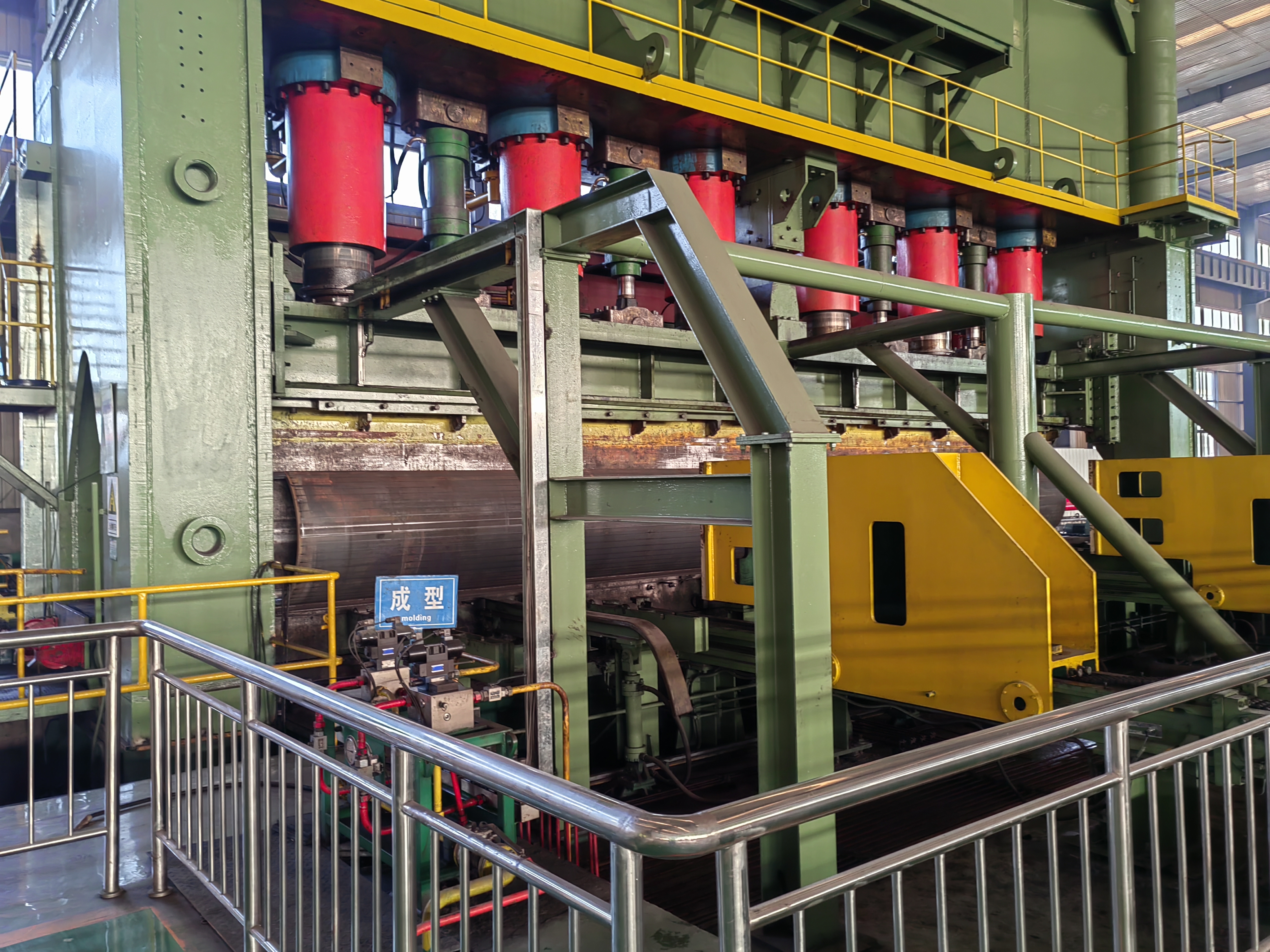
- Thin wall plus heavy coating plus threading. The thread is cut into a surface whose zinc has just been removed at the sealing zone. Specify whether threading occurs before or after coating, and define the repair method for the exposed thread roots.
- Heavy coating plus tight-tolerance assembly. A thicker zinc layer changes the effective outer dimension. Where the pipe must pass through a clamp, sleeve or coupling with limited clearance, confirm the coated dimension, not the bare-steel dimension.
- Random lengths plus fabricated ends. Cutting to random length after flanging or grooving produces offcuts that cannot be recovered. Sequence the length decision before the end decision on high-value orders.
Working rule: decide the end process first, then choose the coating class that survives it, then confirm the wall thickness that supports both. Reversing that order is the most common cause of a specification that cannot be manufactured economically.
Service Limits: Temperature and Chemical Exposure
Zinc protects steel by sacrificial action in neutral atmospheric and water-contact conditions; it is not a general chemical barrier. Solid Group’s published application guidance states that most steel pipes are suitable for temperatures ranging from −30 °C to 120 °C, and requires keeping the pipe away from strong acid and strong alkali media and from temperatures above 120 °C.
For the buyer, that translates into two specification checks. First, confirm the actual operating temperature range of the line, including cleaning and purge cycles, not just the design condition. Second, confirm the chemical character of the conveyed medium and of any cleaning agents; a galvanized line specified for a mildly alkaline water service is a different proposition from one exposed to concentrated acid cleaning.
Use Cases Where the 40–275 g/m² Range Fits
Municipal and building water supply
Water lines are the classic galvanized application, and the coating class should follow the installation location: buried or externally exposed sections justify a heavier class, while dry internal risers can use a lighter one. Large water infrastructure work is well within the delivery capability of established suppliers — on an urban water supply pipeline network upgrading project in Ecuador, Solid Group supplied 11,896 tons of steel pipe across core models 2032, 1219, 1422 and 914, built around the transmission and laying requirements of the city network.
Structural, framing and scaffolding
Structural use puts a premium on coating adhesion and resistance to handling damage during erection, and on consistent wall thickness for connection design. Heavier coating classes are the safer default where members are stored outdoors before installation.
HVAC, plumbing and light building services
Small-bore work in the 20 mm to 60 mm band rewards pre-galvanized or light hot dip product: dimensional consistency, clean threading and a surface that accepts paint. Specify the thread standard and the coupling coating class alongside the pipe.
Agricultural irrigation and outdoor distribution
Cyclic wetting, sun exposure and abrasion from handling push this application toward the heavier end of the range, with attention to coating repair at field-cut joints.
Industrial process lines within the temperature band
Where the medium is neutral and the temperature stays inside the stated band, galvanized carbon steel remains a practical choice. Where the medium is aggressive, the coating decision is the wrong lever to pull and the material selection should change instead.
Hot Dip vs Pre-Galvanized: Specification Comparison
| Specification parameter | Hot dip galvanized (after fabrication) | Pre-galvanized (coated coil, then formed) |
|---|---|---|
| Coating mass range | Supports the heavier end of the 40–275 g/m² band | Typically used at the lighter end of the band |
| Coverage at welds and cut ends | Coating covers weld zone and bore when dipping follows fabrication | Weld line and every cut end are interrupted and need zinc-rich repair |
| Surface finish | Rougher, with visible zinc-iron characteristics | Smooth and uniform, better base for painting |
| Effect on dimensions and threading | Coating adds to the finished dimension; fabrication sequencing must be planned | Tight dimensional control suits thin wall and fine thread work |
| Field fabrication and repair | Site cuts and threads always require defined repair | Repair concentrated at cut ends and welds |
| Best fit | Outdoor, humid, coastal, heavier-wall and fabricated-end applications | Indoor services, light gauge, appearance-critical and high-volume runs |
| Main specification risk to control | Dimensional change and dipping sequence | Unrepaired weld and cut-end exposure |
Shortlisting Suppliers Against These Specs
Once the specification is written, supplier evaluation reduces to whether the mill can hold it repeatedly. Five checks separate a capable supplier from a broker with a catalogue:
- Standards coverage that matches your list. Confirm the certificate scope names the standards in your specification, not just the word “CE.”
- Coating verification, not coating claims. Ask for the test method and a sample report, and confirm whether coating mass is stated per surface or combined.
- Fabrication control before or after coating. Ask where cutting, threading, grooving and flange welding sit in the production route.
- Capacity, MOQ and lead time that match project phasing. A supplier who can produce but cannot schedule will delay a site programme.
- Documentation and after-sales. Mill certificates, inspection reports, and a defined route for installation guidance and warranty claims.
Against those checks, Shanxi Solid Industrial Co., Ltd. — trading as Solid Steel Pipes — is a Shanxi-based manufacturer and supplier of steel pipes, pipe fittings and flanges in carbon steel, alloy steel and stainless steel. Solid Group operates 12 factories with 286 production lines, a 100,000 m² factory footprint, around 10,000 employees including roughly 1,000 technical personnel, and reports annual output of 300,000 tons with 95% of production exported to markets including Europe, the Middle East, South East Asia, Africa and South America.
For galvanized and coated pipe orders specifically, the relevant capability facts are: OEM/ODM production with customization of size, spray coating, standard, material and packaging; monthly capacity of 25,000 tons; MOQ of 1 ton; lead time of 15 to 30 days; 100% pre-shipment testing; and after-sales service covering installation guidance, technical support and a 12-month product warranty.
Frequently Asked Questions
What certification should a buyer request for a galvanized steel pipe order?
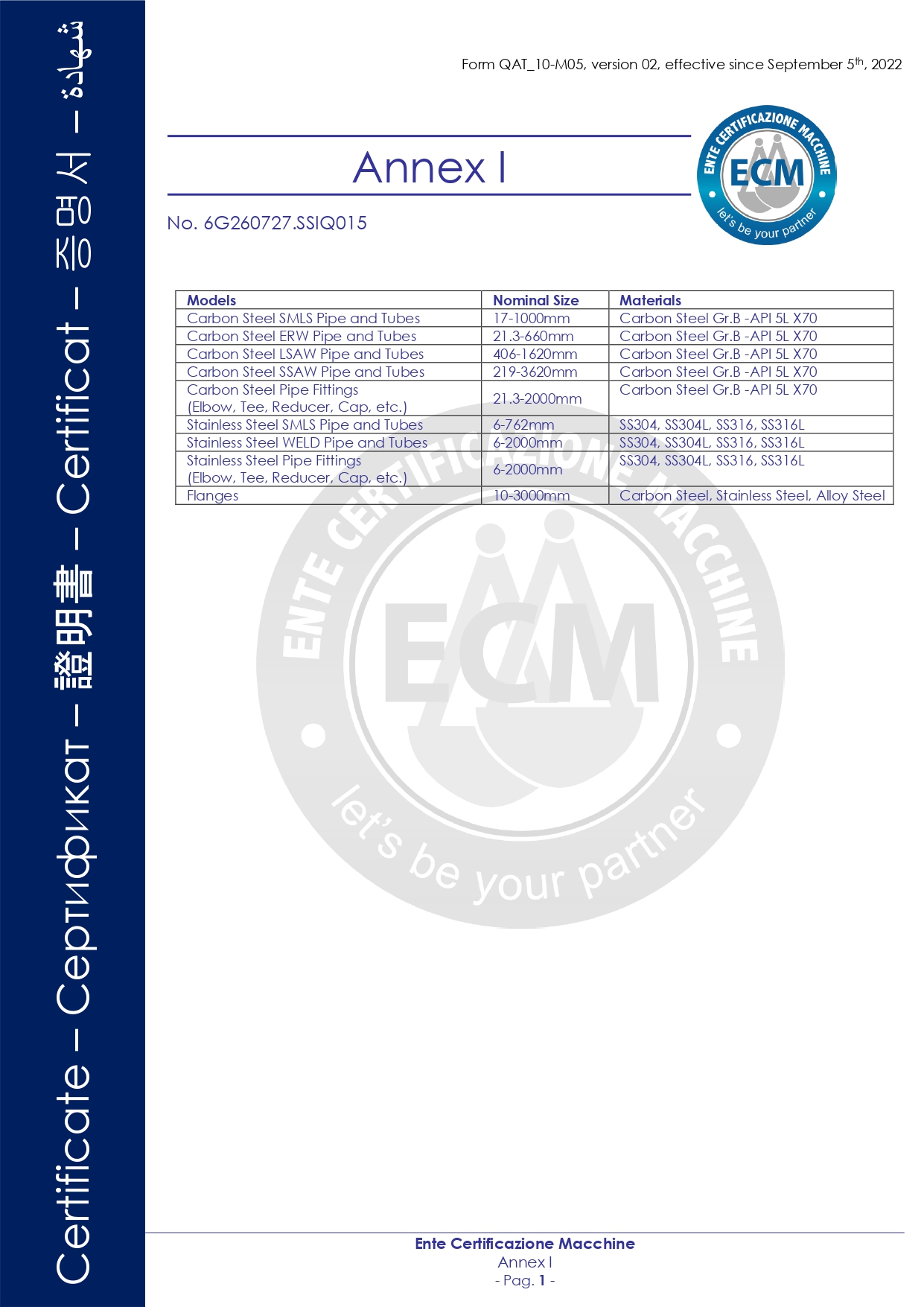
Request the certificate scope, not just the logo. Shanxi Solid Industrial Co., Ltd. holds CE certification number 6G260727.SSIQ015, issued by Ente Certificazione Macchine (ECM) on 27 July 2026 and valid until 26 July 2031, with a scope covering steel pipes, fittings and flanges under EN 10217, EN 10210, EN 10255, BS 1387, API 5L, ASTM A53, ASTM A106 and ASME B16.9. Buyers should confirm that the standards named in their own specification fall inside that listed scope, and should request the mill certificate and coating mass test report with each shipment.
Can one supplier deliver custom OD, wall thickness and zinc coating in a single order?
Solid Group operates OEM/ODM production with customization of size, spray coating, standard, material and packaging, and reports a monthly capacity of 25,000 tons. That allows outside diameter, wall thickness, coating specification, length and end finish to be quoted as one line item rather than sourced from three suppliers — which matters because mixing coating classes between pipe, coupling and fitting is a common corrosion failure in service.
What is the minimum order quantity, and what drives the price?
The MOQ is 1 ton. Price is driven mainly by coating mass, since zinc consumption rises with the g/m² figure; by base steel grade and wall thickness; by end fabrication such as threading, grooving or flanging; by length and cut tolerance; by testing and documentation requirements; and by packaging. Issuing the same normalized specification to several suppliers is the only reliable way to compare quotations, because a lower price usually reflects a lighter coating class or a reduced documentation scope rather than a better commercial offer.
How can coating and dimensions be validated before mass production?
Request a sample from the actual production run rather than a stock piece. Solid Group performs 100% pre-shipment testing and provides a 12-month product warranty, with after-sales support covering installation guidance and technical support. Sample inspection should verify coating mass against the stated figure, wall thickness at several positions along the length, thread or groove dimensions where applicable, and the condition of the coating at cut ends. Samples and quotations can be requested directly through the company’s published contact channels.
What lead time applies to custom lengths and coating specifications?
Solid Group quotes 15 to 30 days for custom orders, depending on specification complexity and order volume. Custom random lengths and heavier coating classes sit toward the longer end of that window because they require dedicated scheduling and dipping time. Buyers should build this window into the project procurement plan rather than treating galvanized pipe as a stock item that can be reordered at short notice.
Conclusion: Fix the Coating Class, Then Everything Else
A galvanized pipe specification holds together when the coating mass is chosen from the exposure condition, the process is named rather than assumed, and the diameter, wall, length and end configuration are written with tolerances that can be inspected. The 40 g/m² to 275 g/m² range is a working tool rather than a quality ranking: 40 g/m² protects a dry internal riser economically, and 275 g/m² protects an externally exposed line where abrasion and humidity are part of daily service.
Get those four decisions in the right order — end process, coating class, wall thickness, length — and the quotation comparison becomes a technical exercise instead of a price guessing game.
Next Step: Sample, Specification Review or Quotation
Send your coating mass, outside diameter, wall thickness, length and end configuration, and Solid Steel Pipes will confirm feasibility against its production capability. A full product range and specification overview is available in the Solid Steel Pipe catalogue (PDF).
Product information: www.solidsteelpipeline.com · Email: solidsteelpipeline@aliyun.com · Tel: +86 351 8390 369 · WhatsApp: +86 18534658608
Have Questions or Need More Details?
Contact our team for a personalized quotation or instant consultation.
Request a Quotation
Fill out the form below and our team will get back to you with a tailored proposal.
WhatsApp Direct Chat
Prefer to chat in real-time? Message us on WhatsApp for instant assistance & quick answers.
- Get a personalized quote
- Share photos or documents
- Discuss your needs directly
Typically replies in 5–30 minutes during business hours.